

Table of Contents
- Which Wool Dye to Choose: A Quick Comparison
- Acid Dyes for Wool: How They Work and Why They Are the Most Effective
- How to Determine the Fabric Composition of Your Sweater Before Dyeing It
- How to Dye Wool in the Washing Machine: Step-by-Step Instructions
- Risks of Wool Felting During Dyeing: How to Avoid Them
- Fixing Uneven Color: Troubleshooting and the Theory of Overdyeing
- The Best Dyes for Wool Sweaters Available Today
- Safety, Equipment, and Environmentally Sustainable Disposal
Last updated: August 3, 2026
Choosing the best dye for wool sweaters isn’t as simple as it seems: wool is a delicate protein fiber, and the wrong dye can ruin a favorite sweater in just a few minutes. This guide from Aybel analyzes the options available on the Italian market in 2026, explains the technical differences between types of dye, and shows how to achieve an even, long-lasting result at home without risking felting or uneven color.
Acid dyes are the most effective choice for wool because they chemically bond to the protein fibers in an acidic environment, ensuring superior color retention and vibrant hues. Universal dyes are easier to find, but the results on wool are often less intense and less long-lasting.
Which Wool Dye to Choose: A Quick Comparison
The ideal wool dye depends on the fabric's composition, your preferred dyeing method, and the desired color result.
| Type of dye | Suitable for | Method | Color fastness | Difficulty |
|---|---|---|---|---|
| Professional acid hair dye | Pure wool, silk, nylon | Stove / Immersion | High | Media |
| Universal Liquid Dye | Wool, cotton, silk, viscose | Washing machine / hand wash | Media | Low |
| Natural Dyeing with a Mordant | Wool, silk, animal fibers | Stove / Immersion | Low to medium | High |
| Complete Natural Dyeing Kit | Wool and Animal Fibers | Stove | Variable | High |
For those who want professional-quality results without too much hassle, high-quality universal dyes like Aybel’s offer the best balance: they work on wool, silk, and many other natural fibers, and can be used both by hand and in the washing machine.
Acid Dyes for Wool: How They Work and Why They Are the Most Effective
Acid dyes are the standard choice for all protein fibers. By binding to the amino groups in wool’s molecular structure, they produce a stable color that withstands repeated washings better than any universal alternative.
According to the technical data sheet on textile dyes published by the Cotton Textile and Apparel Center, acid dyes applied in an acetic acid solution to animal fibers achieve higher levels of dye exhaustion than direct dyes, resulting in significantly higher wash fastness. In practice, this means more saturated colors, less fading after the first few washes, and greater uniformity across the entire surface of the garment.
Acid Dyes vs. Universal Dyes: Practical Differences
Professional acid dyes offer deep, vibrant shades with excellent colorfastness, but they are primarily found in professional settings and require experience to measure out correctly.
Universal dyes work on multiple types of fibers. On wool, the results are good if you follow the correct procedure: water at a controlled temperature, adding vinegar, and gentle agitation. The color saturation is slightly lower than that of pure acid dyes, but it is more than sufficient for most household uses.
Pros of acid dyes: high colorfastness, vibrant colors, complete exhaustion of the dye bath. Cons: less accessible, require specialized equipment, not suitable for plant fibers.
Pros of universal dyes: versatile, easy to use, available in many colors, and machine-washable. Cons: Slightly lower colorfastness on pure wool compared to specific acid dyes.
Natural Dyes as an Alternative: Mordants, Alum, and Real Limitations
Natural dyes have an authentic charm and an appealing eco-friendly profile. To dye wool with herbs, flowers, or bark, you need a mordant: the most common one is rock alum. Some Italian kits, such as the one from Filiera della Lana Trentina, include rock alum and cream of tartar along with detailed instructions.
The real limitation of natural dyes is their lack of consistency: colors vary depending on the season, the quality of the plants, and the water used. Their lightfastness is generally lower than that of synthetic dyes. For those who want to experiment, it’s a fascinating journey. For those seeking a predictable and long-lasting result, synthetic dyes remain the most reliable choice.
How to Determine the Fabric Composition of Your Sweater Before Dyeing It
Dyeing a sweater without knowing its composition is like cooking without reading the ingredients. The integrity of the fiber depends directly on the type of fiber: a sweater made of pure merino wool will absorb the dye in a completely different way than one made of a 50% wool-acrylic blend.
How to identify the composition:
- Check the label - Under Italian law, EU Regulation 1007/2011 requires manufacturers to indicate the percentage composition of fibers on every textile garment. If the wool content is less than 50%, the dyeing result will be less uniform.
- Burn Test - Does a thread pulled from the hem burn slowly and curl up on itself? It's a protein fiber. Does it melt into a plastic ball? It contains synthetic material.
- Water Test - Natural fibers absorb water quickly; synthetic fibers repel it or absorb it very slowly.
As documented in the “Tessile e Salute” guide to fabric composition, blended fibers containing more than 30% synthetic content require specific dyes or higher temperatures to ensure uniform penetration of the textile pigment.
How to Dye Wool in the Washing Machine: Step-by-Step Instructions
It is possible to dye wool in the washing machine, but it requires specific precautions. The main risk is thermal shock: sudden changes in temperature cause immediate and irreversible felting.
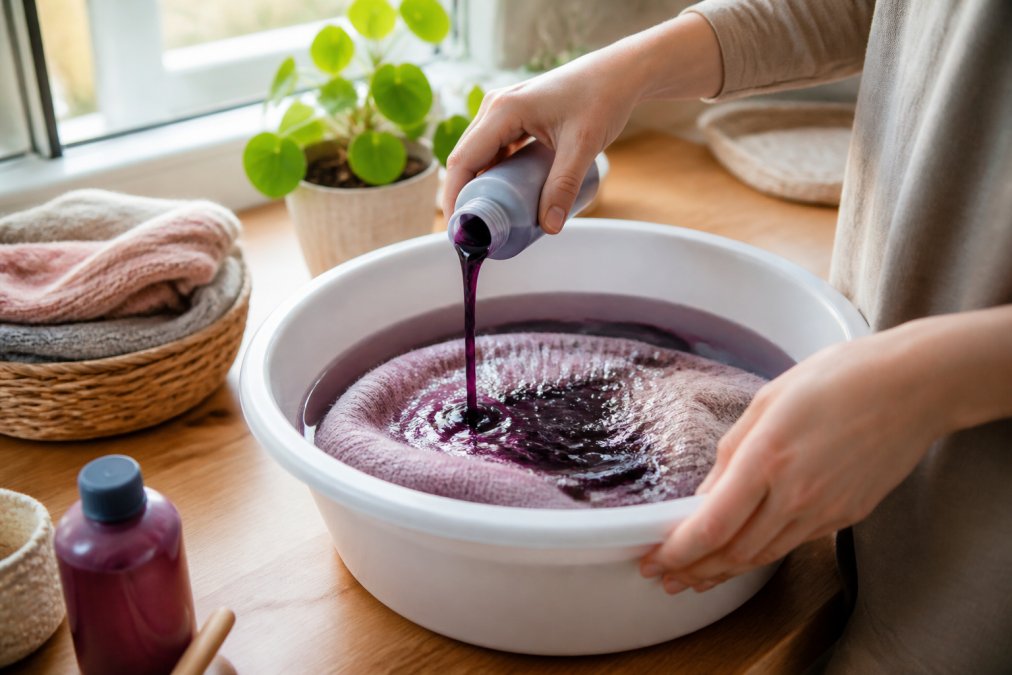
What you'll need:
- Dye suitable for wool (liquid or powder)
- White vinegar (about 100–150 ml per cycle)
- Protective gloves made of latex or nitrile
- Washing machine with a wool or delicates cycle
Procedure:
- Pre-soak the sweater - Soak the garment in lukewarm water for at least 20 minutes to ensure even dye absorption.
- Prepare the dye - Dissolve the dye in hot water, then dilute it further. Add white vinegar instead of salt (essential for protein fibers).
- Load the washing machine —Put the sweater in while it's still wet and add the dye solution to the detergent compartment.
- Select the cycle —Use the wool or delicate cycle, maximum 30°C, short cycle. Avoid high-speed spin cycles.
- Set the Color - After the main cycle, adda color-fixing agent (such as Aybel Fiske) to improve color fastness.
- Rinse thoroughly —use water at the same temperature as the dyeing cycle. The thermal shock caused by cold water can cause the fabric to felt.
Hand-Dyeing on the Stove: When It's Best
Hand-dyeing on the stove is preferable when you want maximum control over the result. Heat the dye bath to about 80°C, submerge the sweater (which has already been wet), and maintain a constant temperature for 30–45 minutes while stirring very gently. L vigorous agitation is key to preventing felting. This method is particularly suitable for merino wool, cashmere, and alpaca.

Risks of Wool Felting During Dyeing: How to Avoid Them
L is the number one enemy of home wool dyeing. It occurs when the scales of the wool fiber, opened by heat, become irreversibly matted due to mechanical agitation or sudden temperature changes.
Factors that cause felting:
- Temperatures exceeding 40°C without a gradual increase
- Quick switch from hot to cold water
- Excessive mechanical agitation (centrifugation, rubbing)
- Soaking time too long at high temperature
How to avoid them:
- Keep the temperature constant throughout the entire process
- Do not wash wool in the washing machine at temperatures exceeding 30°C
- Use the wool cycle with reduced or no spin
- Always rinse with water at the same temperature as the dye bath
- Never wring out the sweater: gently press it and lay it flat on a towel
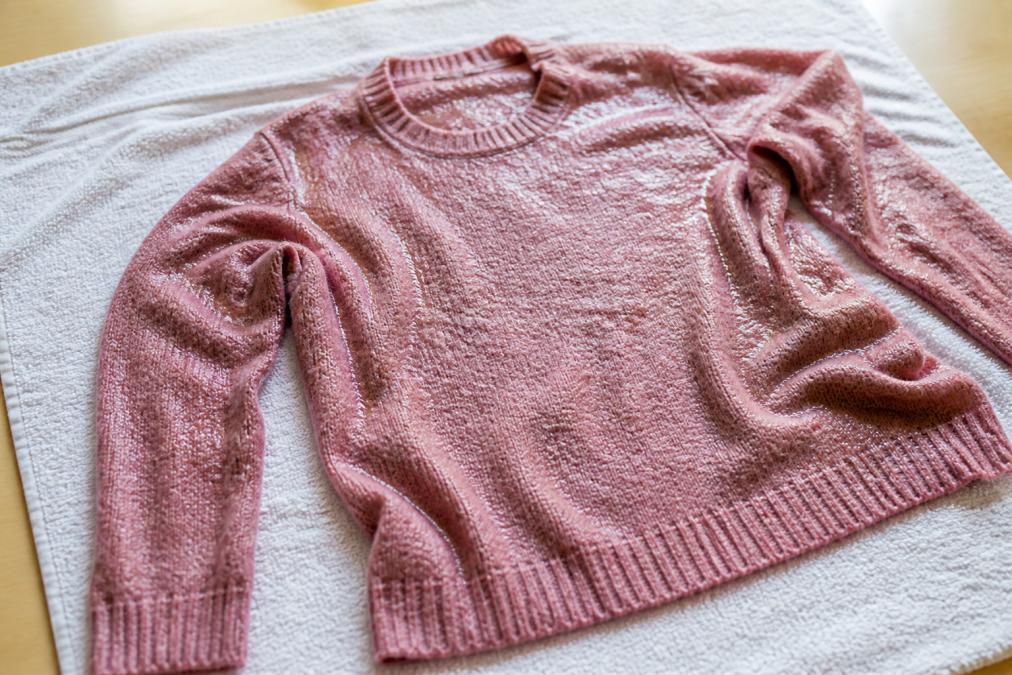
A sweater becomes permanently felted. There is no way to restore it. Controlling the temperature and avoiding sudden agitation are not minor details: they are essential for an acceptable result.
Fixing Uneven Color: Troubleshooting and the Theory of Overdyeing
Uneven color is the most common problem when dyeing wool at home. The main causes are insufficient pre-soaking, uneven agitation during the dye bath, or uneven distribution of the dye in the solution.
Troubleshooting for uneven color:
- If the problem is concentrated in the crease areas, the garment wasn't wet enough before dyeing. Soak it longer—at least 30 minutes.
- If the stains are scattered randomly across the entire surface, the dye did not dissolve completely. Always filter the solution before adding it to the bath.
- If the color is more intense at the edges than in the center, the garment was too tightly packed in the bath. Make sure the sweater can move freely in the solution.
Theory of Overdyeing (overdyeing):
Overdyeing is a useful technique for correcting faded or uneven colors. It involves applying a second layer of dye over the existing color. Always choose a color that is darker or complementary to the original color: dyeing a dark green sweater red will almost certainly result in brown, not a bright red.
The Best Dyes for Wool Sweaters Available Today
Here is a practical selection of the most affordable and reliable options for dyeing wool at home in 2026.
Aybel Fabric Dye: versatile, affordable, and perfect for home use
Aybel is the best choice for anyone who wants professional results without the hassle. The Aybel dye line is formulated to work on wool, silk, cotton, linen, viscose, bamboo, and nylon, with options for both hand-dyeing and machine-dyeing. The price is fixed at 4.99 euros per package.
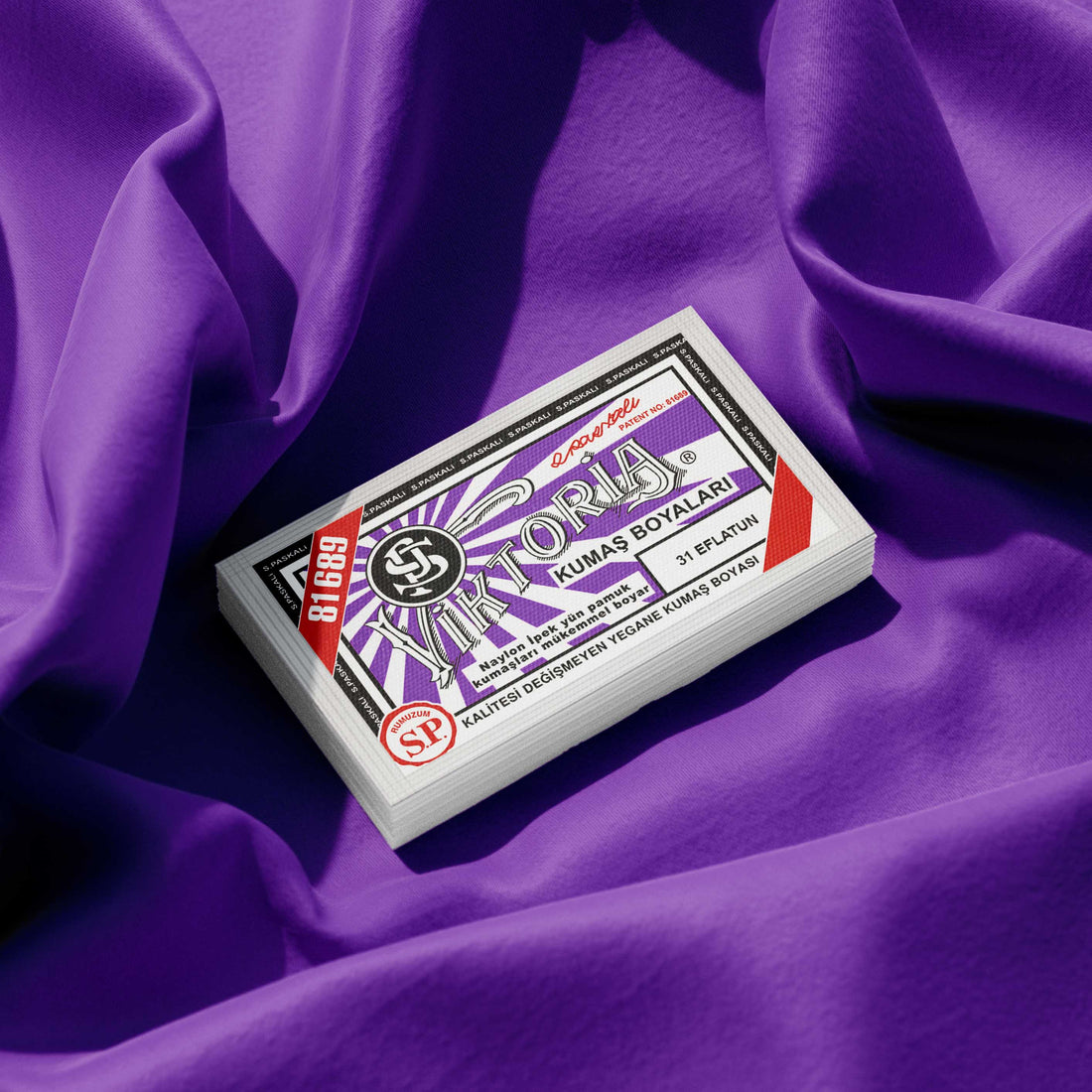
The range includes shades such as [Black Fabric Dye](https://aybel.shop/products/tintura-per-tessuti-nero), Ruby Red Fabric Dye, Pine Green Fabric Dye, and Jeans Blue Fabric Dye, among many others. For brighter colors, Bright Lilac Fabric Dye and Canary Yellow Fabric Dye offer high color saturation even on wool.


To ensure maximum color fastness, Aybel also offersFiske Fixing Agent for 4.99 euros, which can be used both by hand and in the washing machine after the dyeing cycle.
Pros: Versatile for use with many types of fiber, easy to use, available in many colors, affordable, suitable for beginners and crafters. Cons: Like all universal dyes, the color saturation on pure wool is slightly lower than with specific acid dyes.
Average customer rating: 4.8 out of 5.0.
Natural Dyeing Kit: For Those Who Want an Eco-Friendly Approach
For those who prefer a sustainable approach, natural dye kits featuring herbs and natural mordants offer an interesting alternative. The Trentino Wool Natural Dye Kit includes rock alum and cream of tartar as mordants, along with instructions for dyeing up to 500 grams of fiber using plant-based materials.
The advantage is the reduced environmental impact and the ability to achieve unique shades. The disadvantage is the variability of the results: natural colors depend on the quality of the plants, the local water, and the season.
Pros: eco-friendly, unique colors, a rewarding artisanal process. Cons: inconsistent results, longer process, lower wash fastness.
Professional acid hair dyes: salon-quality results without leaving home
Professional acid dyes, such as those in Polikem’s Poliwool line, are specifically formulated for wool and silk. They offer maximum wash fastness and deep, vibrant colors, but require purchasing directly from the manufacturer and some familiarity with the acid-dyeing process. They are the right choice for experienced craftspeople who want professional-quality results.
Safety, Equipment, and Environmentally Sustainable Disposal
Dyeing fabric at home involves the use of chemicals that require some basic precautions.
Required equipment:
- Disposable protective gloves (nitrile or latex)
- An apron or clothes you don't mind getting dirty
- A pot or basin specifically for dyeing (do not reuse it for food)
- Spoon or stirring stick
- Kitchen thermometer for monitoring temperature
- Good ventilation in the workplace
Environmentally Sustainable Disposal:
According to ISPRA guidelines for the household disposal of chemicals, dye residues should not be poured in large quantities down the household drain without dilution. The proper procedure is to dilute them thoroughly with water and drain them slowly. Very small amounts, such as those typically found in household use, do not pose a significant problem for municipal sewer systems. For natural dyes, disposal is generally unproblematic: plant-based substances are biodegradable.
Safety Equipment: Always wear gloves when preparing and applying the dye. Avoid inhaling dust from the loose dye. Wash your hands thoroughly after each use.
| Option | Estimated price | Suitable for | Method | Color fastness |
|---|---|---|---|---|
| Aybel Fabric Dye | 4.99 euros per package | Wool, silk, cotton, and others | Hand and Washing Machine | Good |
| Fiske Fixative Agent | 4.99 euros per package | All dyed fibers | Hand and Washing Machine | Improves adhesion |
| Natural Hair Dye Kit | Variable | Wool, silk, animal fibers | Stove | Low to medium |
| Professional Acid Dyes | Estimate | Pure wool, silk, nylon | Stove / Immersion | High |
Choosing the right dye for wool sweaters means first understanding what you’re dyeing and what result you want to achieve. For most home uses, a high-quality all-purpose dye with a fixing agent offers the best balance between convenience and results. For those who want to venture into professional-level dyeing, acid dyes specifically formulated for wool offer superior colorfastness but require more experience.
Dyeing a wool sweater at home is an accessible project, but the details matter: the wrong temperature, insufficient pre-soaking, or the wrong dye can ruin a garment in just a few minutes. Aybel offers a range of fabric dyes suitable for wool and other natural fibers, with options for both hand-dyeing and machine-dyeing, a professional dye fixative, and the option to receive personalized color advice. Get started with Aybel and achieve professional results right in your own home.
Frequently Asked Questions
Can you dye a wool sweater without ruining it?
Yes, a wool sweater can be dyed at home with excellent results, provided you use a dye specifically designed for protein fibers, water at a controlled temperature between 40°C and 60°C, and gentle movements without vigorous agitation. The main risk is felting, which can be prevented by avoiding sudden temperature changes and friction. With an acid dye or a suitable dye such as Aybel, the result is even and long-lasting.
What are the best acid dyes for wool available for home use?
Acid dyes for wool are the most effective choice for protein-based fibers because they chemically bond to the fiber in an acidic environment, ensuring high colorfastness to washing. For home use, Aybel dyes (starting at €4.99 per bottle) are compatible with wool, silk, mohair, and nylon; they can be used by hand or in the washing machine and include a dedicated fixing agent. They are also suitable for those with no prior experience in fabric dyeing.
How do you dye wool in the washing machine without felting it?
To dye wool in the washing machine without the risk of felting: use the wool or delicate cycle at 30–40°C, add vinegar or citric acid as an acid mordant, do not exceed 600 rpm during the spin cycle, and do not combine the dyeing process with a high-temperature pre-wash. Add Aybel color fixative in the final stage to enhance color fastness. Lay the sweater flat to dry; never hang it vertically.
How can you avoid stains and uneven color when dyeing wool?
Uneven color is almost always due to one of three causes: the fiber not being sufficiently pre-soaked, the dye bath temperature being too high from the start, or uneven agitation. To prevent this, soak the garment in lukewarm water for at least 20 minutes before starting, gradually bring the temperature up to the maximum, and agitate the fabric with slow, steady movements. If the result is still patchy, over-dyeing with a darker color is often the quickest solution.
How much does it cost to dye a wool sweater at home compared to buying a new one?
With a bottle of Aybel dye for €4.99 and a bottle of Fiske fixative for €4.99, the total cost is about €10 to completely refresh a garment. Disadvantages: Considering that a quality wool sweater costs on average between €40 and €120 in Italian stores, dyeing at home allows you to save significantly, extending the garment’s life and avoiding the waste typical of fast fashion.
This article was written using GrandRanker