

Index
- What makes a high-quality fabric dye?
- Machine dyeing: speed and convenience
- Cotton dye: uniform and long-lasting results
- Wool and Silk Dyeing: Techniques and Precautions
- Synthetic fabric dyeing: compatibility and limitations
- Comparison: Which dye to choose for your project
- Frequently Asked Questions
Last updated: October 10, 2026
What makes a high-quality fabric dye?
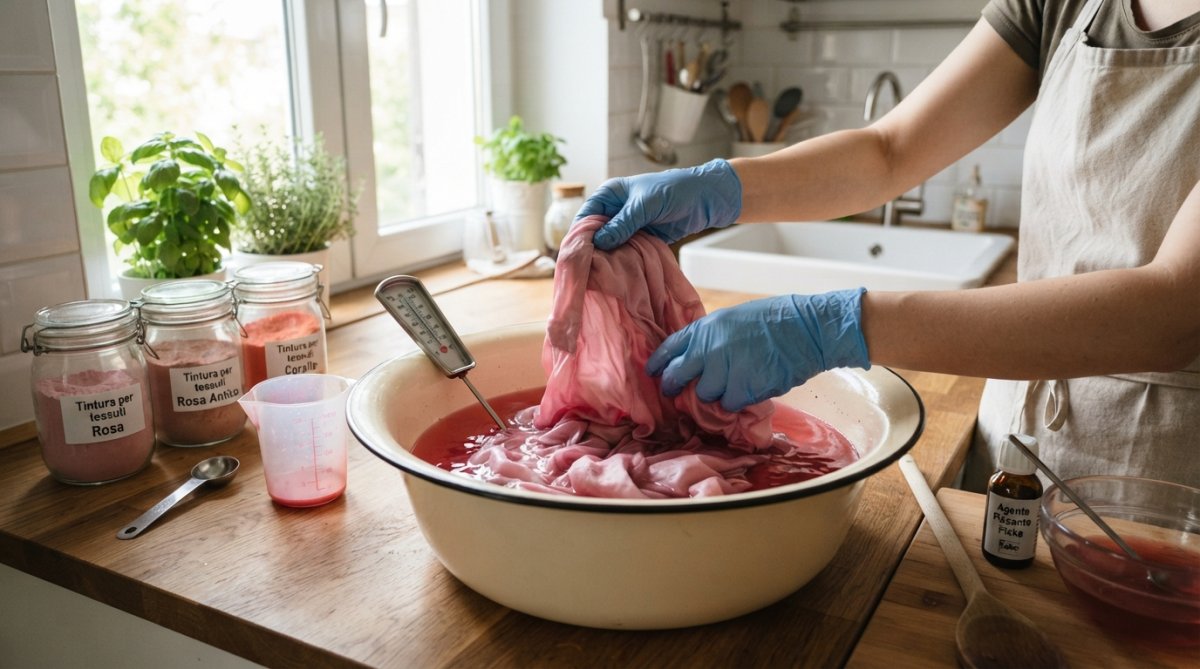
High-quality textile dyes are distinguished by measurable and verifiable characteristics. When purchasing fabric dyes online , you should look for concrete indicators that guarantee long-lasting and consistent results.
Fastness to washing and light: the main criterion
Professional dyes meet international standards for wash and light fastness. A quality dye maintains its color without visible fading.
Dye concentration and uniform color rendering
A quality dye contains a sufficient concentration of dye for vibrant, vibrant colors. In the case of Aybel dyes, a 10g sachet is enough to dye 250g of dry fabric with a deep, even shade.
L depends on the fineness of the powder and wetting agents that promote penetration. Test on a small sample before dyeing the entire garment.
Ingredients and safety of use
A quality dye should clearly indicate whether it contains allergenic substances and whether any residues are easily disposable.
Aybel is suitable for home use, even in the washing machine .
Declared compatibility with specific fibers
A quality dye explicitly states which fibers it works best on: cotton, linen, silk, wool, polyamide (nylon), or specific blends. This transparency indicates that the manufacturer has tested the product and knows what results to guarantee.
Aybel claims compatibility with natural and semi-synthetic fibers, excluding pure polyester. A dye that promises to work on "everything" is likely of inferior quality.
Fixing and durability over time
A well-formulated dye includes fixing agents that stabilize the bond between the dye and the fiber.
An indicator of quality is the presence of detailed instructions for fastening.
Machine dyeing: speed and convenience
Machine dyeing is the quickest and most convenient method for professional results, reducing preparation time and allowing you to dye larger quantities of fabric.
Add the product to the longest wash cycle, add the wet fabric, and start the cycle. It works especially well for bulky items like sheets, sofa covers, or curtains.
Aybel's 225ml liquid bottles dye up to 1kg of dry fabric, and machine dyeing doesn't require constant monitoring like hand dyeing.
One disadvantage is certainly the lesser control over the final shade, but for those who want simplicity and uniform results on large volumes, this method is unbeatable in terms of time saved.
Cotton dye: uniform and long-lasting results
Cotton is the easiest fabric to dye due to its fibrous structure that absorbs dyes naturally, producing uniform and long-lasting results.
Universal dyes like Aybel's work excellently on cotton because the cellulose fibers bind easily with dyes, producing bright, stable colors.
You can choose between hand dyeing (full control over the shade) and machine dyeing (time-saving). In both cases, cotton absorbs the dye quickly, completing the process in less than an hour.
Durability depends on fixation. A well-fixed dye resists washing without significant fading, transforming a faded garment into one that looks new.
Wool and Silk Dyeing: Techniques and Precautions
Wool and silk require gentle handling. These protein fibers are sensitive to excessive heat and sudden movements, which can cause felting in wool or damage in silk.
The dye bath should be kept at 60-70°C for wool; higher temperatures cause the fibers to felt. Silk requires the same careful heat treatment and gentle movements during immersion.
Aybel offers dyes compatible with wool and silk.
After dyeing, rinse wool and silk in progressively cooler water until the water runs clear. This step is crucial for setting the color and removing excess dye.
Synthetic fabric dyeing: compatibility and limitations
Synthetic fabrics present significant challenges for home dyeing. The key is understanding the molecular structure of each synthetic fiber.
Why is polyester difficult to dye?
Polyester has a hydrophobic molecular structure that repels water-soluble dyes. Universal dyes like Aybel bind to cellulose and protein fibers, not polyester. Dyeing pure polyester requires disperse dyes at 130-150°C for 45-60 minutes, which is impractical at home without specialized equipment.
Aybel is not suitable for pure polyester, as its formulation is optimized for natural and semi-synthetic fibers.
Polyamide (Nylon): the exception among synthetics
Polyamide (nylon) is the only synthetic that responds well to universal dyes like Aybel. It has a protein structure similar to wool, with amino groups that bind to acid dyes. You can dye it using the same techniques as cotton or wool, although the final shade may be slightly more intense.
If the label says "Nylon," "Polyamide," or "PA," you can proceed with Aybel. If the garment is 100% nylon, the results will be comparable to cotton.
Natural-synthetic blend: the practical solution
Many modern garments are blends of natural and synthetic fibers. If the fabric contains at least 50% natural fibers (cotton, linen, wool) and the rest is polyester, Aybel can produce good results.
The dye binds steadily to natural fibers, while polyester absorbs the dye less well. A 60% cotton-40% polyester blend will produce a lighter color than pure cotton.
The most common blends are:
- Cotton-Polyester (50-80% cotton) : Aybel works well, slightly lighter in color
- Wool-Polyester (70-90% wool) : Aybel works well, results comparable to pure wool
- Linen-Polyester (60-80% linen) : Aybel works, uniform color
- Silk-Polyester (70-90% silk) : Aybel works, but requires thermal precautions as for pure silk
Acrylic and other synthetics: when to give up
L , polyacrylic, and polyurethane do not respond to universal household dyes. If the garment is 100% acrylic or contains more than 50% acrylic, Aybel will not produce satisfactory results.
Fabrics with special treatments (water-repellent, stain-resistant, odor-resistant) often don't dye well. These treatments create a barrier that prevents the dye from penetrating. If the garment has special treatments, avoid dyeing it.
Details and stitching: the invisible problem
Buttons, stitching, labels, and polyester details will remain the original color after dyeing. If the garment has white polyester stitching and you intend to dye it black, the stitching will remain white. Be aware of this before you begin.
Quick Compatibility Table
Synthetic fiber |
Compatibility with Aybel |
Expected result |
Notes |
|---|---|---|---|
100% Polyester |
❌ No |
No color or rapid fading |
Requires disperse dyes and temperatures >130°C |
100% Nylon |
✅ Yes |
Uniform and long-lasting color |
Treat like wool or cotton |
Cotton-Polyester (50-80% cotton) |
✅ Yes |
Uniform color, 10-15% lighter |
Acceptable results |
Wool-Polyester (70-90% wool) |
✅ Yes |
Uniform color |
Follow wool precautions |
100% acrylic |
❌ No |
No color or very faint |
Not dyeable with home methods |
Acrylic-Natural (>50% acrylic) |
❌ No |
Disappointing results |
Avoid |
Polyurethane |
❌ No |
No color |
Not dyeable |
Treated fabrics (water-repellent, stain-resistant) |
❌ No |
Color doesn't take hold |
The treatment blocks the dye |
When to look for alternatives
If your garment is mostly synthetic and you still want to dye it, you have a few home options. For polyester, there are specific dyes (disperse dyes) that require a dedicated pot, an accurate thermometer, and a temperature control of 130-150°C for 45-60 minutes.
For acrylic, there are no effective home solutions.
Comparison: Which dye to choose for your project
Choosing the right dye depends on three main factors: the type of fabric, your preferred dyeing method, and your budget. Aybel offers flexible solutions for every scenario, from home dyeing to the most ambitious project.
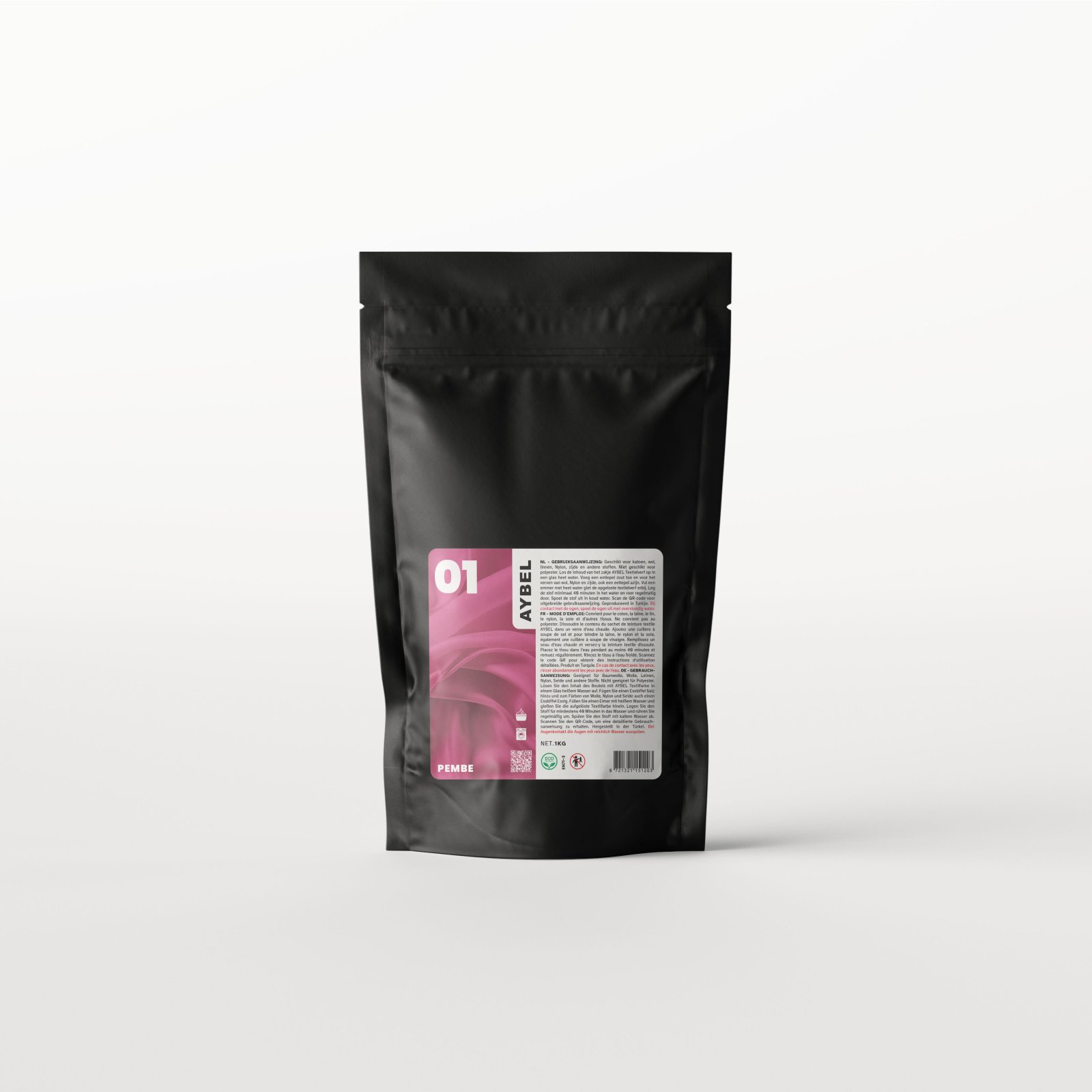
For cotton or a predominantly natural blend, Aybel Fabric Dye, priced at €4.99, is an economical and versatile product. A 10g sachet dyes 250g of fabric, while the 225ml bottle dyes up to 1kg.
Product |
Price |
Amount |
Best for |
|---|---|---|---|
Black (sachet) |
€4.99 |
10g (250g fabric) |
Small hand projects |
Black (bottle) |
€16.92 |
225ml (1kg fabric) |
Dyeing in the washing machine |
Lilac On |
€4.99 |
10g |
Colorful projects on naturals |
Ash Grey |
€4.99 |
10g |
Neutral and sophisticated shades |
Tie Dye Set 1 |
€8.95 |
3 colors + accessories |
Creativity and playful projects |
Large formats |
€175 |
1kg or 5kg |
Professional/artisan use |
If it's a one-time project, the €4.99 sachets are convenient. If dyeing is a recurring task, investing in a 225ml bottle or larger sizes will reduce the cost per garment.
With Aybel's high-quality textile dyes, you can transform a faded garment into something new. Choose the right product for your fabric and preferred method, following the fiber compatibility guidelines. Professional results are within your reach. Discover Aybel's full range and start your dyeing project today.
Frequently Asked Questions
What is the best technique for dyeing cotton fabrics?
Cotton dye works well both by hand and in the washing machine. For even results, soak the fabric in warm water with the dye for 30-40 minutes, stirring regularly. Dyeing in the washing machine is faster and reduces the risk of uneven stains. Aybel offers cotton dye in 10g sachets (ideal for 250g of fabric) and 225ml bottles for larger quantities.
Can I dye synthetic fabrics like polyester?
Most fabric dyes, including Aybel, are not suitable for pure polyester or some acrylics. Aybel dyes work well on cotton, wool, silk, linen, viscose, bamboo, and polyamide (nylon). If the garment contains mixed synthetic fibers, the final color may be less intense on the synthetic portions.
How do I ensure that the color doesn't fade after washing?
Colorfastness depends on the quality of the dye and proper application. Always use the right amount of dye for the weight of the fabric: one 10g Aybel sachet dyes 250g of fabric. Wash the garment in cold water after dyeing and use fixing agents if necessary. Colorfastness remains stable with properly dyed natural fabrics.
Which dye should I choose for wool and silk?
Wool and silk require dyes specifically designed for protein fibers. Aybel dyes are suitable for both and can be applied by hand in warm water (40-50°C) for 20-30 minutes. Avoid sudden changes in temperature that could damage the fibers. Silk absorbs color quickly, so monitor the process to achieve the desired shade.
How much does it cost to dye a garment compared to buying a new one?
A 10g sachet of Aybel costs €4.99 and dyes 250g of fabric. A 225ml bottle costs €4.99 and dyes 1kg. For a medium-sized garment (200-300g), €4.99 is enough. Adding any fixing agents, the total cost is still less than buying a new garment, especially considering the sentimental value of the original.